
Antifreeze Poisoning in Dogs and Cats: Signs, Treatment, and Prevention
· @Amy
As the days get shorter and the first frost settles in, many of us start winterizing our cars, camps, and cabins. It’s a routine part of fall in New England. It’s also the start of the season when our emergency veterinarians in [city, state] see one of the most dangerous poisonings in pets: antifreeze poisoning in dogs and cats.
Antifreeze poisoning is frightening because so little can do so much damage, and because the signs can fade and look like improvement just as the most serious harm begins. If your pet might have swallowed antifreeze, the most important thing to know is this: don’t wait for symptoms. Call your veterinarian or the nearest emergency hospital right away.
Why Is Antifreeze Toxic to Dogs and Cats?
Most traditional antifreeze is made with ethylene glycol. It tastes sweet, so dogs and cats will readily lap up a puddle under a car or a drip from a jug. Once it’s swallowed, the body turns ethylene glycol into toxic compounds that cause severe, often irreversible kidney failure.
The amount it takes is shockingly small. For a cat, less than a teaspoon of undiluted antifreeze can be fatal. For a medium-sized dog, a few tablespoons can be enough.
Common Sources of Antifreeze Around the Home
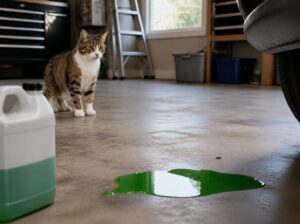
Car radiators and garage spills are the obvious sources, but they aren’t the only ones. Antifreeze and ethylene glycol can also turn up in:
- Toilets and drains in winterized homes, seasonal camps, and RVs
- Some windshield washer fluids, brake fluids, and de-icers
- Snow globes and other decorative items with liquid inside
- Heating system fluids and solar heating systems
- Leaks from cars parked in driveways, streets, or shared garages
Symptoms of Antifreeze Poisoning in Pets
Antifreeze poisoning tends to happen in stages, and the timeline matters.
In the first 30 minutes to 12 hours, pets may seem drunk: wobbly, uncoordinated, or disoriented. You may also see vomiting, excessive thirst, and frequent urination.
Between roughly 12 and 24 hours, many pets appear to get better. This is the most dangerous part of the illness, because owners understandably think the crisis has passed. In reality, the toxic compounds are damaging the kidneys. Some pets may have a rapid heart rate or fast breathing during this stage.
After that, kidney failure sets in, usually within 12 to 24 hours in cats and 36 to 72 hours in dogs. Signs include lethargy, vomiting, loss of appetite, drooling, mouth ulcers, seizures, and producing little or no urine. By this point, the prognosis is poor.
Antifreeze Poisoning Treatment: Why Time Is Everything
Antifreeze poisoning is treatable, but only if treatment starts early. There’s an antidote that blocks the body from converting ethylene glycol into its toxic byproducts, and it works best when given as soon as possible.
That’s why we urge pet owners never to “wait and see.” If you saw your pet drink antifreeze, found a spill they may have gotten into, or notice a chewed container, get help immediately, even if your pet seems completely fine.
At the hospital, your veterinary team may run blood tests, check the urine for crystals or fluorescent dye (added to some antifreeze brands), and start the antidote, IV fluids, and supportive care. Pets that have already developed kidney failure may need intensive treatment, and some will not recover.
What to Do If Your Dog or Cat Drinks Antifreeze
- Call your veterinarian or an emergency hospital right away. Tell them what your pet may have swallowed, how much, and when.
- Bring the product container or label if you can do so quickly.
- Don’t induce vomiting unless a veterinarian tells you to.
- If you need guidance on the way, you can call the ASPCA Animal Poison Control Center at (888) 426-4435 (Fees may apply.)
How to Prevent Antifreeze Poisoning
A few simple habits go a long way:
- Choose a safer product. Antifreeze made with propylene glycol is significantly less toxic than ethylene glycol. It isn’t completely harmless, but the risk is far lower.
- Clean up spills immediately and thoroughly, then rinse the area with water.
- Store containers tightly closed and up high, out of reach of pets and kids.
- Check under your car regularly for leaks, and fix them promptly.
- Keep pets away from driveways, garages, and streets where other vehicles park.
- Flag winterized toilets and drains at camps and seasonal homes, and keep lids closed and doors shut.
- Dispose of used antifreeze properly at a recycling or hazardous waste facility, never on the ground or down a drain.
Some antifreeze brands contain a bittering agent meant to discourage animals from drinking it. That’s helpful, but it isn’t a guarantee, so treat every antifreeze product as a serious hazard.
24/7 Emergency Vet Care in Vermont
Antifreeze poisoning is one of the true emergencies in veterinary medicine, where minutes and hours make the difference. If you think your pet may have been exposed, don’t wait. Our emergency team is available 24/7 at 802-863-2387. Call us or come straight in.
Antifreeze Poisoning FAQ
How much antifreeze is toxic to a dog or cat? Very little. Less than a teaspoon of ethylene glycol antifreeze can be fatal to a cat, and a few tablespoons can kill a medium-sized dog.
How long does it take for antifreeze to affect a dog or cat? Early signs like wobbliness and vomiting can appear within 30 minutes. Kidney failure can follow within 12 to 24 hours in cats and 36 to 72 hours in dogs.
Can a dog or cat survive antifreeze poisoning? Yes, if treatment starts quickly. The earlier your pet gets the antidote, the better the chances. Once kidney failure has set in, survival is much less likely.
Why does my pet seem fine after drinking antifreeze? Many pets appear to recover within a day, but this is when the kidneys are being damaged. Never wait for symptoms to get help.
Is pet-safe antifreeze really safe? Antifreeze made with propylene glycol is much less toxic than ethylene glycol, but it isn’t completely harmless. Store and clean up every type carefully.